
California Sheephead
Fishing San Diego
Sheephead, scorpionfish, and cabezon — three reef species that hit hard, fillet beautifully, and carry some of the strangest biology on the entire West Coast.

Meet the California Sheephead, Scorpionfish, and Cabezon
Three of the most distinctive reef species off our coast share this group. All three live and feed on the rocky bottom where rockfish and lingcod hold:
-
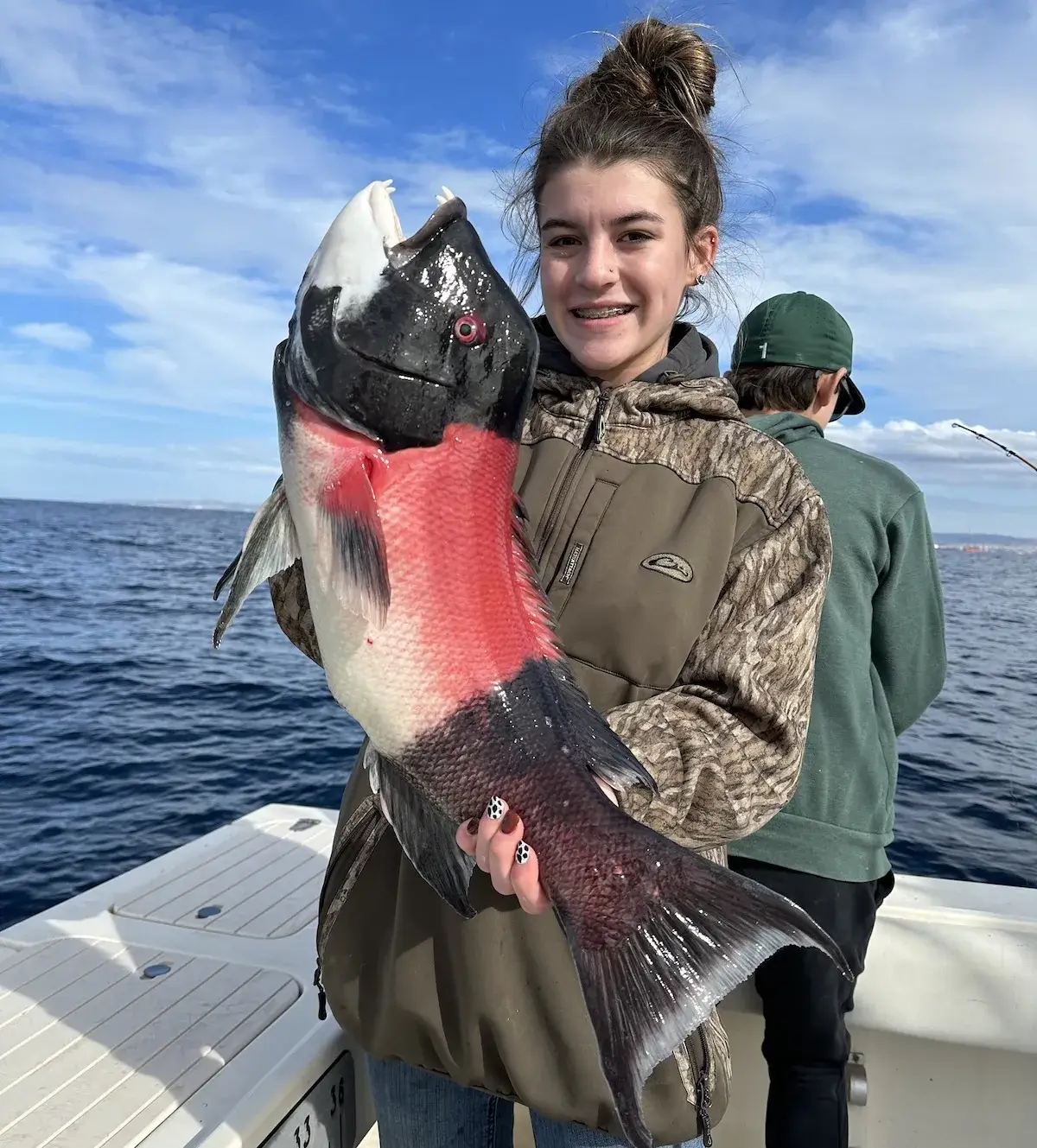
California Sheephead (Semicossyphus pulcher)3–15+ lbs A heavy-jawed wrasse with permanent canine teeth, built for crushing sea urchins. Males have a black head and tail, a wide reddish-orange midriff, a white chin, and a fleshy forehead bump. Females are silvery pink and smaller. Typical catches run 3 to 10 pounds, with trophy fish topping 15.
-
Scorpionfish (Scorpaena guttata)Venomous Spines Also called sculpin in the local fleet. A masterfully camouflaged ambush predator with venomous spines along the dorsal, anal, and pelvic fins. Handle with care — the crew handles every fish at the rail. The white meat is among the finest fillets on the coast.
-
Cabezon (Scorpaenichthys marmoratus)Toxic Roe A giant sculpin with a broad, frog-like head. Hit hard, fights harder, grows well past 15 pounds. Important note: cabezon roe is toxic to humans and must never be eaten. The fillet itself is excellent.
All three species deliver one of the most underrated and most reliable bites in the local fishery.

What Makes Them So Special
Each fish in this group carries a biological twist that sets it apart from anything else on the reef — and drives everything about how you fish for it.
California sheephead are protogynous hermaphrodites. Every fish is born female. The largest individuals transition into males as they grow, triggered by social cues in the kelp forest population.
Remove the dominant males from a population and the largest remaining females will become male within months to fill the vacancy. The sex change is reversible at the population level — not in the individual fish.
Dorsal, anal, and pelvic fins all carry venom strong enough to send an angler to the ER. Brothers Sport Fishing crews handle every scorpionfish with a glove and a careful grip, every time, without exception.
Cabezon eggs and guts contain a documented neurotoxin that has poisoned people. The fillet itself is completely safe and excellent table fare. The warning applies across California, Oregon, and Washington.
Where to Find Them Off Our Coast
This entire group lives on the same rocky bottom that holds rockfish and lingcod, making them a guaranteed part of any reef drop on a private charter.
Rocky Reefs & Pinnacles
- Drop-offs where current pushes urchins and crabs into ambush zones
- Sheephead and scorpionfish both work this structure heavily
Kelp Forest Edges
- Sheephead patrol the bases of standing kelp, picking urchins off the rock
- Crushing canine teeth are designed for shellfish, not chasing bait
Hard-Bottom Flats
- Cabezon and scorpionfish sit motionless waiting for bait to drift past
- Camouflage so complete they are often invisible until they move
Local Coastline Within 10 miles
- Year-round bite on resident sheephead, scorpionfish, and cabezon
- 100 to 250 feet over rocky mixed bottom in the Mission Bay range
- No slow season — consistent action every month
Coronados Islands 20 miles south — Mexico
- Bigger average size on every species thanks to lighter fishing pressure
- Deeper reef edges produce trophy sheephead on full-day runs
- International ID required — full-day departure from Mission Bay
Tackle, Bait & Technique
These reef species respond to the same dropper-loop rig used for rockfish — with a few adjustments for the heavier, harder-fighting cabezon and the larger sheephead.
| Rod | Medium-heavy conventional, 6 to 7 feet |
| Reel | Shimano conventional with 40 to 65 pound braid |
| Leader | 30 to 40 pound fluorocarbon |
| Hooks | 1/0 to 3/0 live-bait hooks |
| Bait | Squid is the all-around winner; live shrimp and sardines also produce well on sheephead |
| Weight | 8 to 12 oz to hold bottom in current |
The Reef Drop
Drop the rig to the bottom, crank up two turns, and wait. Sheephead and scorpionfish often hit with a slow, sustained pull. Cabezon hit like a punch. When a cabezon eats, set the hook immediately and pull the fish away from structure — the bigger ones will dive back into rock and break you off if you give them any angle.
Fighting Sheephead
Sheephead fight in steady, powerful arcs and will head directly for kelp. Steady upward pressure works best — keep the rod high and don't let the fish find a stalk to wrap around. The canine teeth can damage leader material, so inspect your leader after each fish.
Your California Sheephead Charter Options
Two trip types put you on the right reef bottom, both leaving from Mission Bay.

3/4 Day Charter
Nine hours on the local rocky bottom targeting sheephead, scorpionfish, and cabezon alongside rockfish and lingcod. Enough running time to work the best reef structure and stay on fish when the drop is productive.
View This CharterCoronado Islands Charter
A 12-hour day in Mexican waters for bigger fish, deeper reef structure, and the reefs that hold trophy sheephead. Lighter pressure than the local coastline means bigger average size on every species. International ID required.
View This CharterAlso in the mix
Reef drops out here come with company — a typical day pulls up rockfish on the same drop, lingcod lurking in the rocks, and calico bass along the kelp edges.
Frequently Asked Questions
Yes. The species is a protogynous hermaphrodite: every fish hatches female, and the largest females transition into males as they grow. The change is triggered by social cues in the kelp forest population — remove the dominant males and the largest females will become male within months to fill the vacancy. Peer-reviewed research has confirmed the biology in detail.
Not with bare hands. Scorpionfish (locally called sculpin) carry venomous spines along the dorsal, anal, and pelvic fins. The venom can send an angler to the emergency room. Brothers Sport Fishing crews handle every scorpionfish at the rail with proper grip and gloves — this is standard practice on every trip, no exceptions.
Cabezon roe and viscera contain a neurotoxin that has poisoned people. The warning is long-documented across California, Oregon, and Washington. The fillet itself is completely safe and excellent — firm, white, and mild. Eggs and guts must be discarded entirely. The crew handles cleaning and will make sure everything is done correctly.
Year-round with no closed season for recreational anglers. The bite stays steady most months at depths between 100 and 250 feet. Scorpionfish and cabezon follow California groundfish season rules — typically open April through December, with depth zones that shift annually per CDFW regulations.
California currently allows 5 sheephead per angler per day with a 12-inch minimum total length. Scorpionfish and cabezon have their own size and bag limits under the groundfish rules. Regulations update annually — Brothers Sport Fishing captains check live rules before each trip and measure every keeper at the rail.
Ready to Drop on the Reef?
Private charter from Mission Bay — year-round sheephead, scorpionfish, and cabezon on the local and Coronados reefs.
Text or Call +1 619-289-3352